--------------------------------------------------------------------------------------------------------
But the point is that the Silver Age was where they could do anything in comics, and nobody would question it because abnormal was normal. In this morass came the popularity of super-powered animals, which is where Comet the Superhorse comes in.
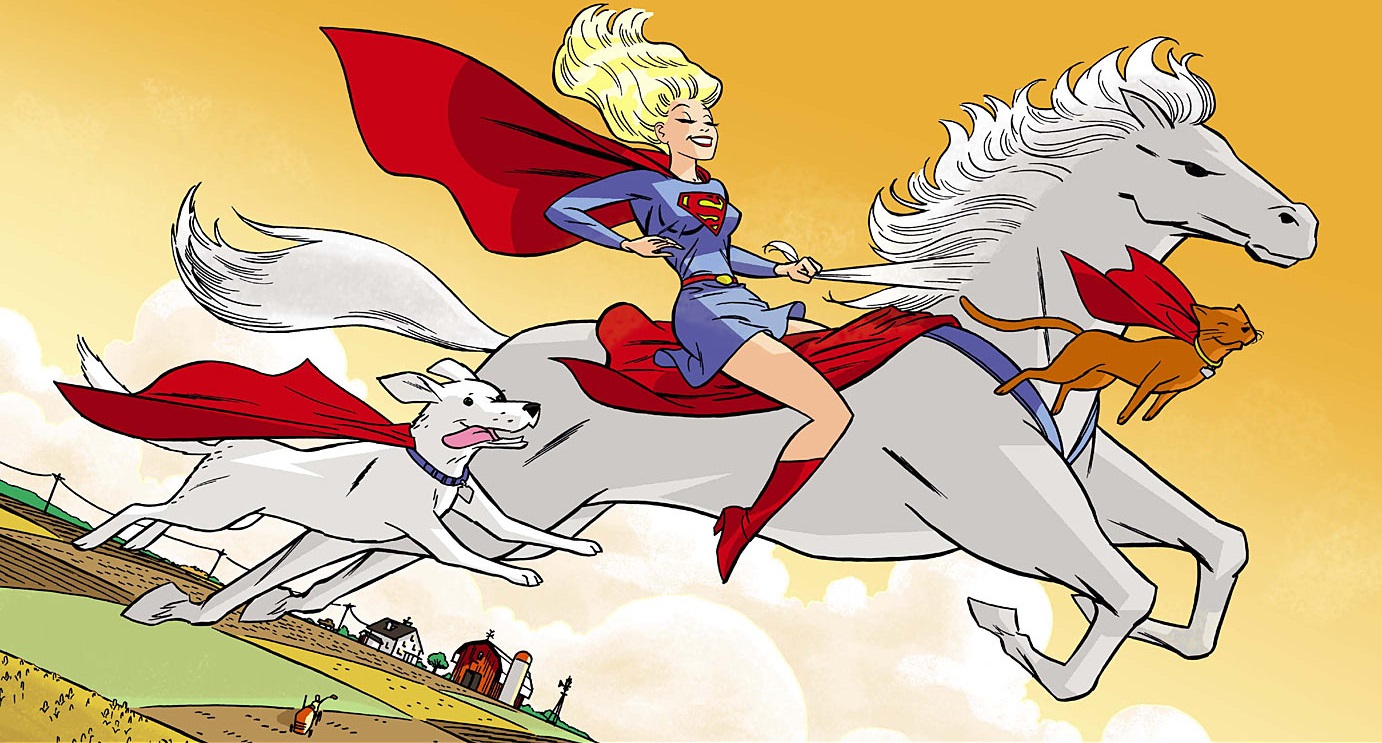
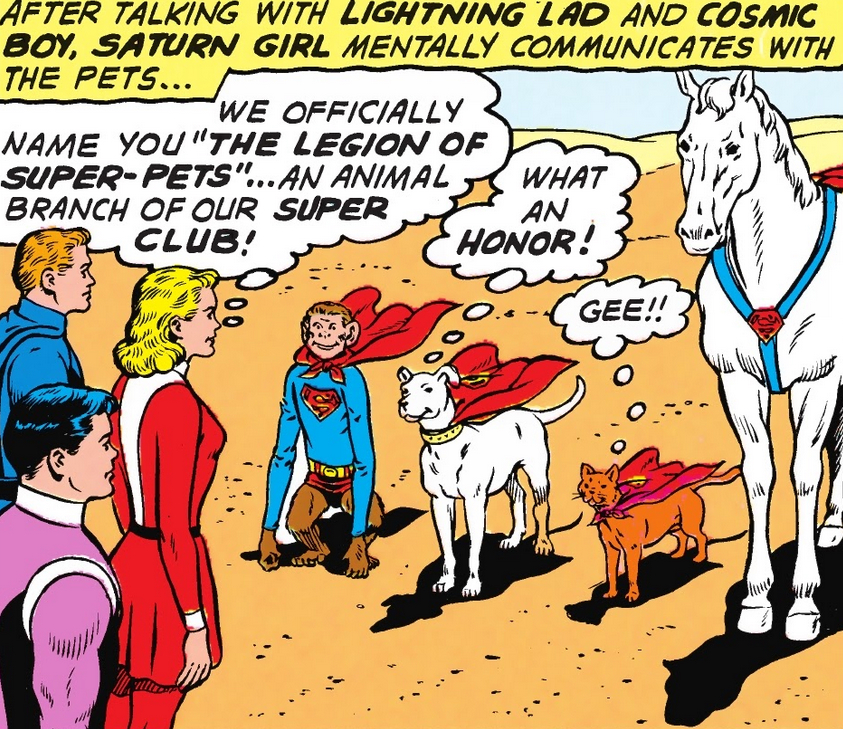
As seen in the above picture, Comet is not the only super-powered animal associated with Supergirl (And the Superman family). There is also Krypto the Superdog, Streaky the Supercat, and (not pictured), Beppo the Supermonkey. And yes, each and every one of these characters would be given a backstory and reason for their existence shortly after they debuted. But let's talk about Comet the Superhorse. Comet debuted in February 1962 in Adventure Comics #293 as a supporting character of Superboy, before he became a full character associated with Supergirl in September 1962's Action Comics #292. He was created by Superman co-creator Jerry Siegel and artist Curt Swan, and first met Supergirl in the story The Super-Steed of Steel!

In this story, Supergirl (Linda Danvers) has dreams of the superhorse, and she and her parents later go to a ranch where they meet said horse. After the horse saves Supergirl from an alien invasion using his own superpowers, she adopts the horse and gives him a red cape of her own, all the while wondering where he came from. Later on we learn that Comet was originally named Biron, a centaur from Ancient Greece who was cursed by the sorceress Circe. Circe also gave the horse superpowers like super-strength, super-speed, and immortality. Part of the curse is that when a comet passes by the solar system he is in, he can shapeshift into a man, where he assumes the identity of "Bronco" Bill Starr, rodeo rider. In human guise, he has an infatuation with Supergirl and Lois Lane.

Unfortunately, Comet's time in comics came to an end after the 1985 event Crisis on Infinite Earths rebooted the DC Universe. From then onwards, Comet no longer existed in the DC Universe. Sure, there was a different character called Comet that existed in the new DC Universe, but he is unrelated to the superhorse. So, yeah, Comet the Superhorse. Him being a centaur is the reason he's at the bottom entries, but you can't go wrong with a horse that had superpowers on par with a character like Supergirl.
------------------------------------------------------------------------------------------------
#12-Red Hare/赤兔马-Chì tù mǎ (Romance of the Three Kingdoms/三國演義-Sān guó yǎn yì)
This is a bit of a complicated one. This horse did exist in real life, but it is most well known in a fictionalized account that people mistake it for history.
The Red Hare horse was the steed of the warlord Lǚ Bù
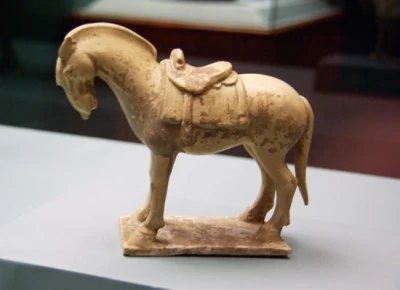
(吕布) during the Three Kingdoms period of China (184 AD-280 AD). Historical records during this time period had a saying: Among men, Lǚ Bù. Among horses, Red Hare. It is almost fitting that one of the most exceptional warriors of the time would ride atop a superior horse. There is speculation that Red Hare is a Ferghana horse, a breed that was imported to China from the Ferghana province of modern-day Uzbekistan. The Ferghana horse was also known as "Blood-Sweating Horses" because at the time, the horses were infected by blood-sucking parasites. The blood likewise mixed in with the sweat of the mighty horses, which could explain how Red Hare got its name.
statue of the Blood-Sweating Horse (汗血馬/hàn xuè mǎ )
Red Hare however would get more accolades in fiction, specifically the romanticized account of the Three Kingdoms.

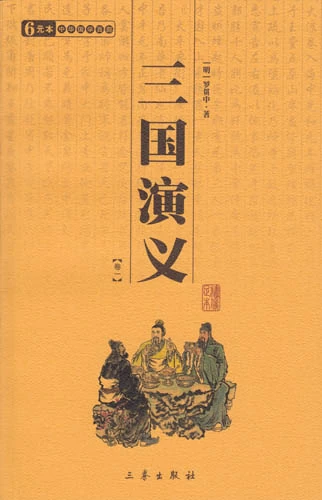
The various stories, poems and legends of the Three Kingdoms Period would eventually be meshed to form the novel Romance of the Three Kingdoms (三國演義-Sān guó yǎn yì), written by Luó Guànzhōng (罗贯中) in the 1400's. It is in this version where the Red Hare shines as a superior horse above others of its kind. In the "compiled" fictionalized account, we see exactly how Lǚ Bù acquired Red Hare, and its description of being a horse so godly that it can traveling great speeds in a day, how it traverses different terrain like nothing, and is of great stature with neighs that evoke ambition. After Lǚ Bù died, Red Hare eventually passed onto a more noble individual: Guān Yǔ (关羽), one of the most celebrated heroes of the story. Throughout the rest of the book, Guān Yǔ would always ride atop Red Hare, and it can be assumed that rider and steed grew fond of each other because Red Hare dies shortly after Guān Yǔ is killed.
Red Hare's legendary status would lend its way into other fictionalized and modern portrayals of the Three Kingdoms period, and two examples come to mind. First is the Dynasty Warriors video game series, where Red Hare is an unlockable steed and has the best stats in the game:
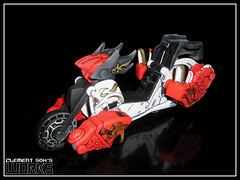
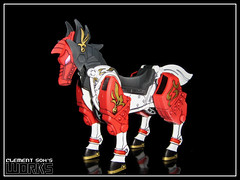
The second is in the SD Gundam Sangokuden toyline, where Red Hare is not only a horse...it can also transform into a motorcycle.
Seriously.
Red Hare. It makes other horses during its time green with envy.
------------------------------------------------------------
#11-Shadowfax (Lord of the Rings)
If there is a running element that props up in
Lord of the Rings, its the classification of certain people, objects or animals. There was the titular One Ring to Rule Them All, Aragon, the King of Man who returned, Frodo Baggins, the heroic hobbit...and Shadowfax, the lord of all horses.
In the (long) fictional history of
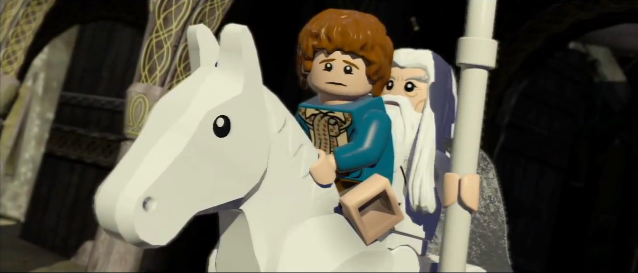
Lord of the Rings's setting of Middle Earth, Shadowfax is of the Mearas horses, known throughout the land as a breed that surpasses the intelligence, strength and speed of the average horse. It is because of this that the Mearas horses are usually only ridden by the male royalty of the Kingdom of Rohan. The only exception to this is one Gandalf the Grey. After Gandalf escaped Saruman the White's trap, the wizard found his way to Rohan where King Théoden offered him one of their horses. For one reason or another, Gandalf chose the horse that could not be tamed by the soldiers of Rohan: Shadowfax.
It isn't exactly known what the horse saw in the wizard, but whatever the case, Shadowfax warmed up to him, but didn't allow a saddle to be equipped and would only transport people it wanted to carry unless Gandalf said otherwise. Shadowfax's great speed and swiftness soon brought Gandalf to Rivendell and the other future members of the Fellowship of the Ring. Gandalf dismissed the horse afterwards and it returned to Rohan. Shadowfax would later return to Gandalf (now reborn as Gandalf the White) and be permanently by his side for the rest of the Lord of the Rings saga. By the end of the saga, Shadowfax accompanied Gandalf as he crossed the great Sea and left Middle Earth.
Shadowfax had some good moments in the movie adaptations of Lord of the Rings, such as the above video when Shadowfax is first summoned, or when Gandalf tells Shadowfax to "Run, and show us the meaning of haste". Sadly the horse that portrayed him, Blanco, experienced health problems and was put down in April 2014. But Shadowfax's snowy white mane, its reputation, and association with one of the essential characters of the Lord of the Rings (and The Hobbit) is why he was chosen among all the other horses in the story.
Shadowfax. Possibly giving Red Hare a run for its money.
-------------------------------------------------------------
#10-Quick Draw McGraw (The Quick Draw McGraw Show)
In a list about fictional horses, we can't just stick with steeds can't we? How about we talk about an anthropomorphic horse that acts like a human?
Quick Draw McGraw! Champion of the good guys! Slave driver to his own kin!
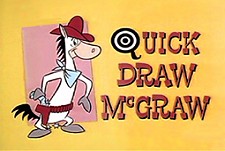
Quick Draw McGraw is the titular character of the third show created by American animation studios Hanna-Barbera. He debuted in 1959 sponsored by Kellogg's cereal and was voiced bu Daws Butler, who already voiced many of Hanna-Barbera's anthropomorphic characters such as Snagglepuss, Huckleberry Hound, and Yogi Bear. His segment of his show (The show was divided into three segments with different characters and settings) often had him being the Sheriff of a Wild West Town and protecting it from ne'r-do-wells and miscreants. Assisting Quick Draw is his deputy, the Mexican burro Baba Looey.
As this was originally made during the height of popular Western movies and similar shows, Quick Draw can sort of be seen as a pastiche or parody of the genre. Quick Draw was clearly a noble-hearted individual with a strong sense of justice and good intentions, but he was pretty dim-witted and blind to his flaws. Baba Looey is often the one who would think themselves out of dangerous situations or realize the plans of the villain of the episode. However, as the Sheriff, Quick Draw would be the one to put Baba Looey in line, with recurring catchphrases like "I'll do the thin'in around here, and don't you forget it!"
Of course, it wasn't enough that Quick Draw was a parody of Western heroes; he was also a parody of one of the earliest pulp heroes too.
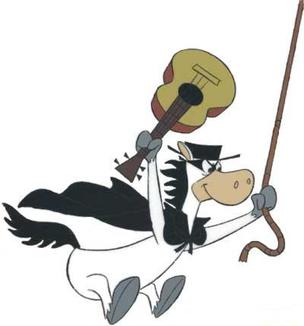
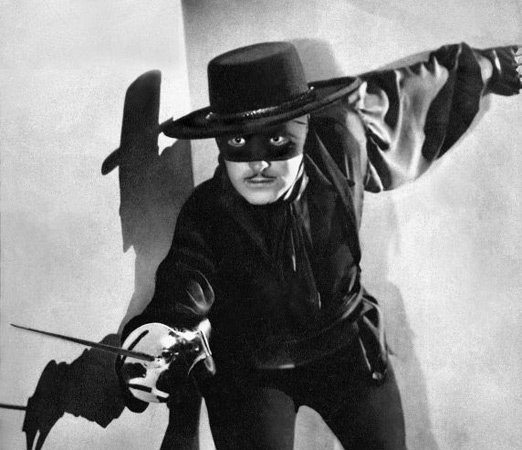
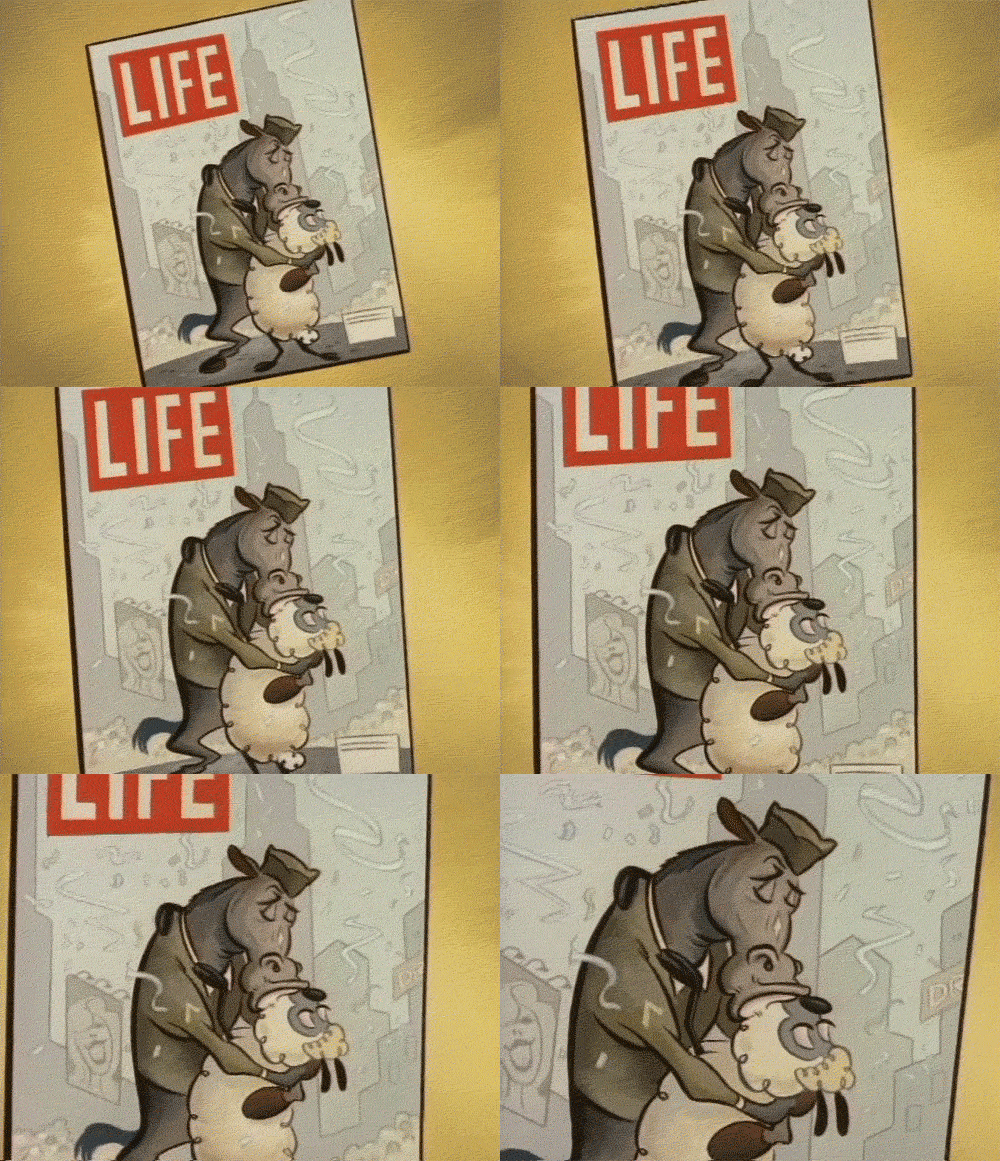
Even though Quick Draw could use a gun, sometimes he dresses up as an alter-ego named "El Kabong". As the picture suggests, he uses a guitar to beat up villians off-screen with hilarious cartoon sound effects. One of the writers based the El Kabong persona off of Douglas Fairbanks's portrayal of Zorro back in the 1920s. For one reason or another, it is the El Kabong aspect of Quick Draw that made an impact on pop culture, from professional wrestling to a gag seen in the classic animated show The Critic.
Quick Draw was one of Hanna Barbera's more well known properties years on, appearing in other various Hanna-Barbera related cartoons, Samurai Jack, South Park, and most recently, a 2012 commercial on Metlife Insurance.
Quick Draw McGraw. He may not be quick in the head, but he sure is quick to do the right thing with some old-school cartoon shenanigans.
-----------------------------------
#9-Mr. Horse (The Ren & Stimpy Show)
Another anthropomorphic horse. And quite a versatile one too. Mr. Horse is a horse of many occupations, from a war hero, to a UN spokesman, to an airplane pilot, to a doctor. He may also just be a liiiiiiiitle touch insane, as this video indicates. May not be suitable for children.
But really, the reason why Mr. Horse is so versatile to begin with is because The Ren & Stimpy Show is one of the craziest cartoons ever made. This was made back in Nickelodeon's early years when its standards and practices were more loose. As a result, this 1991 cartoon's brand of off-color humor and slapstick was on a level of its own, with crazy setups, weird visuals, and innuendos abound.
Ren and Stimpy had no established quo, and every episode would always feature something different. Hence the versatility of Mr. Horse. I personally haven't seen the show so I'm not entirely aware of the reason why Mr. Horse ended up being the most popular supporting character. It could be because of his verstality, his voice, or perhaps his catchphrase of...
Or it could be perhaps because Mr. Horse is the only sane, logical thinking person in the entire show. Then again, the world of Ren and Stimpy is crazy enough as it is. Who knows, really?
Mr. Horse. For all we know he could be the descendant of the horse ridden by the Native American leader Crazy Horse.
--------------------------------------------------------
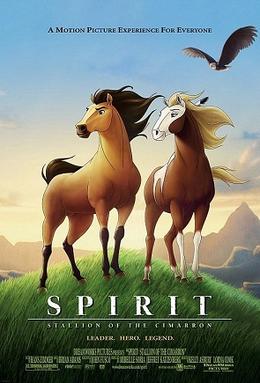
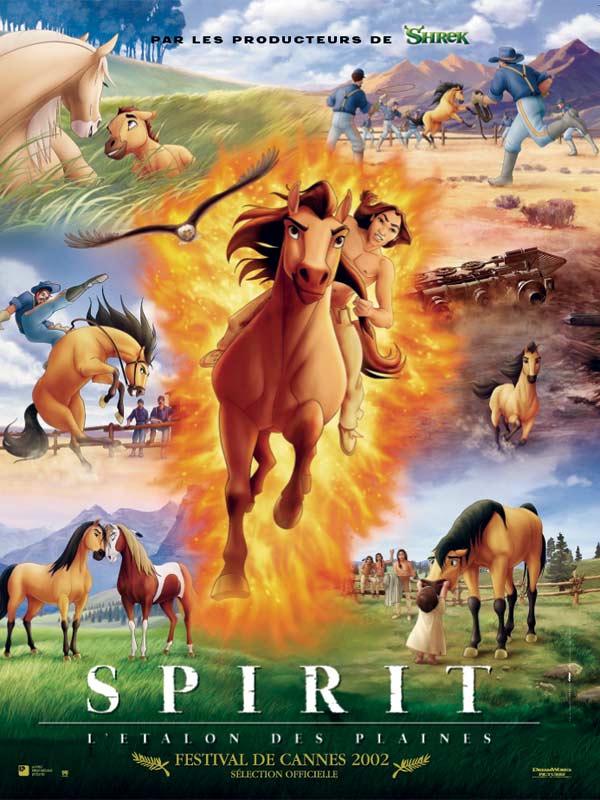
#8-Spirit (Spirit: Stallion of the Cimarron)
Let's talk about probably one of the most unique animated films ever made. Despite this movie being primarily about animals, the animals do not talk or act like humans whatsoever.
Spirit: Stallion of the Cimarron was made by Dreamworks in 2002. This may be surprising to some, but much like Disney, Dreamworks has also dabbled in traditional 2D animation shortly after its key staff broke off from Pixar. In fact, Spirit: Stallion of the Cimarron is the third of four 2D Dreamworks films amidst a sea of CGI animated films that the company is more well known for. It's, in my opinion, the second best 2D Dreamworks film behind Prince of Egypt.
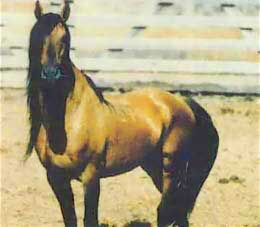
But about the horse himself. The story takes place in the American Old West during the 1800's. Spirit is a Kiger Mustang, a strain of the Mustang horse, which are descended from horses first brought to America by the Spanish.
Kigers are generally agile, intelligent, bold, but gentle and calm. This perfectly lines up with Spirit's behavior throughout the movie. In the movie, Spirit grows up to be a good leader of his herd, but with an insatiable curiosity. Because this movie takes place in the new frontier of the Old West, you know the inevitable conclusion. Spirit is captured by the soldiers of the White Man and is to be tamed, but without success. Spirit's soul-searching journey wrought with trials and tribulations leads to him to a young Native American of the Lakota Tribe, Little Creek, and his mare named Rain, and the three work together to find their place in their quickly changing world and return Spirit back to his herd.

What makes Spirit an interesting character boils down to one thing: Spirit does not talk or speak. Sure, Matt Damon provides narration, but it is less him talking and more monologuing Spirit's innermost thoughts. Otherwise, we see Spirit's journey and encounters in his movie in purely action, animation, music, and facial expressions. This is a time when actions definitely speak louder than words, seeing Spirit bond with Little Creek despite the two not getting along is a major driving point in the movie. Little Creek and Spirit are of two different worlds, but when a third, bigger world threatens them both, they must find a compromise and work together. By the end of the movie, you empathize with Spirit and fully understand his journey and quest.
Spirit. A word that can describe what a lot of fictional horses with riders have in abundance.
--------------------------------------------------------------------
#7-Ponyta (Pokémon)
Picture a world where there are no animals, but instead mysterious creatures of all shapes, sizes and power. These creatures can be captured and tamed by humans who use them for a multitude of tasks, as pets, or as partners as some humans travel around the world to be the very best, like no one ever was. These mysterious creatures are known as Pokémon.
Pokémon was created by Satoshi Tajiri in February 1996, and based off the hobby of insect collecting. Since the release of the first two Pokémon games, Pokémon Red Version & Green Version, the franchise has evolved into a billion-dollar franchise that spans 19 years, dozens upon dozens of games, a trading card game, a long-running anime, 17 movies, comic books, and 721 different species of Pokémon. It is one of Nintendo's most lucrative franchises, alongside the likes of Mario and The Legend of Zelda, and has a dedicated fanbase of adults and children that still faithfully play it to this day. Yours truly included.
Pokémon designs are usually based off real life animals As such, let's take a look at the one that is based off a horse. First introduced in Pokémon Red/Green, #77 in the Pokédex, and of the Fire Type, it is the Fire Horse Pokémon, Ponyta.
Ponytas are fast runners. They typically roam in grasslands, and their manes are literal fire which they can control (There are rare instances when a Ponyta's flame mane is blue instead of red). Their hooves are said to be harder than diamonds, and they allow the Ponytas to have extraordinary jumping abilities. As a Fire Type Pokémon, Ponytas have access to a variety of Fire Type moves such as Flare Blitz, Fire Blast, and Inferno. Ponytas often excel in their Attack and Speed stats, and when they reach Level 40, they evolve into an even stronger Pokémon: Rapidash.

Alas, Rapidash is based more off a unicorn than a regular horse. And as established, mythological creatures do not count. So instead Ponyta takes the spot. Aside from the games, Ponyta appeared in other Pokémon media, such as the episode The Flame Pokémon-athon! where the main character Ash Ketchum rode one in a race. The episode Holiday Hi-Jynx also had Santa utilize a Ponyta to pull its sled. It also appeared in the comic Pokémon Adventures and is the primary means of transport of the character Platinum Berlitz.
Ponyta. While not a Pokémon that I normally use, if it existed in real life, I'd certainly want one. It's a horse that has control over fire. How cool is that?
------------------------------------------
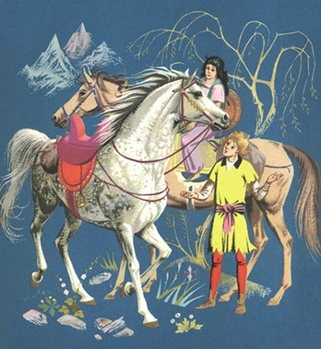
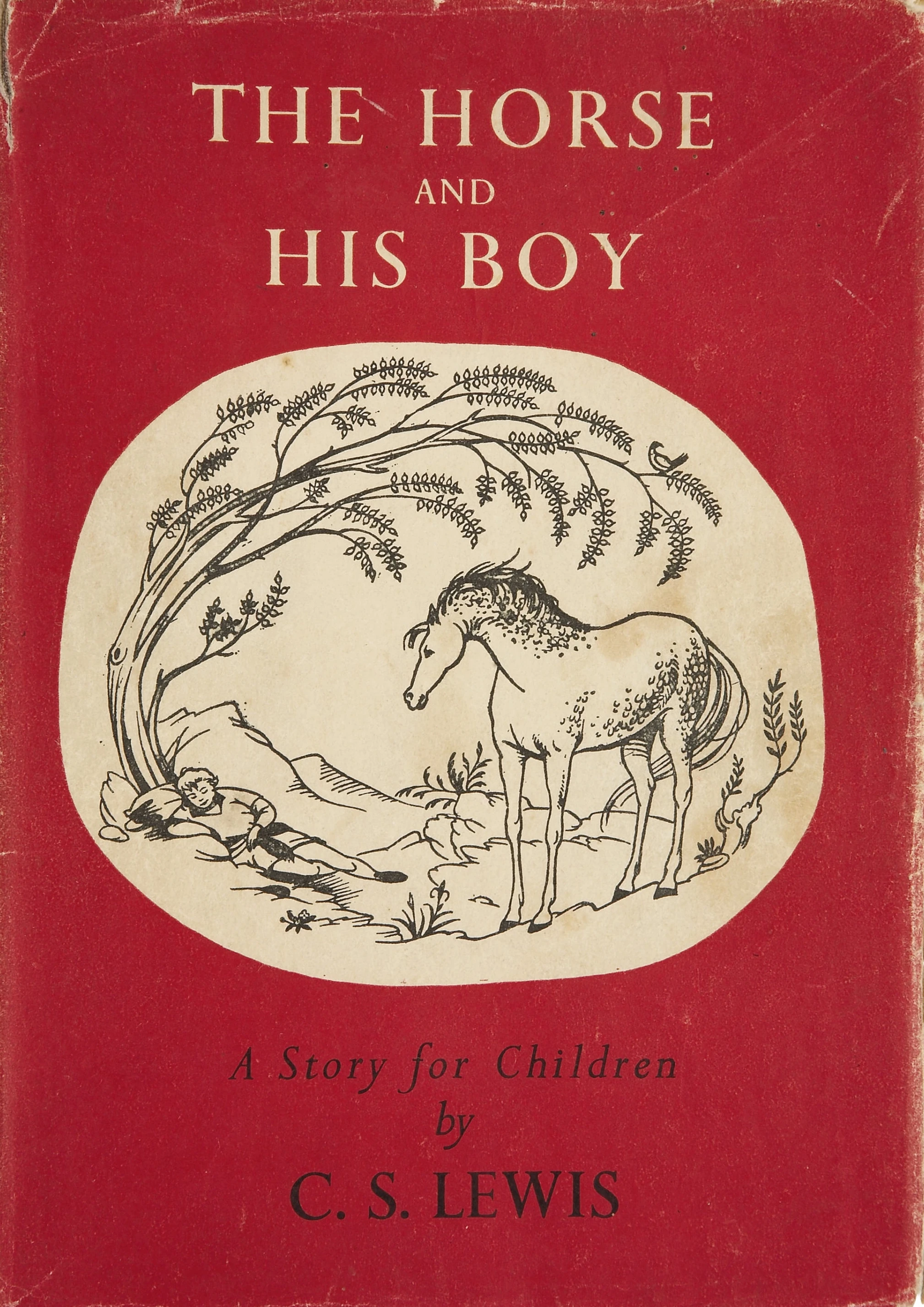
#6-Breehy-hinny-brinny-hoohy-hah aka Bree (The Chronicles of Narnia: The Horse and His Boy)
Let us go to another fictional world where horses are more than just ordinary steeds to be ridden on. This is the world of Narnia, and this is the character Bree, a titular character of the third book of the Chronicles of Narnia: The Horse and His Boy.
The Horse and His Boy was the fifth published book in the series, but is the third chronologically. This is actually a rather unique book in the series because of its differences from the other six books. It takes place entirely in Narnia instead of beginning and ending in the real world, it is not a sequel to any story, but takes place during the final chapter of The Lion, the Witch and the Wardrobe, and its main characters are pure Narnian and not originally from Earth. It also doesn't any specific analogies to the Bible.
The story centers around four characters: the peasant boy Shasta, runaway princess Aravis, and their two respective (talking) steeds Bree and Hwin. The four are unhappy in the Kingdom of Calormene and yearn to go to the north and Narnia. But along the way they discover an invasion plot and must hasten to Narnia and warn the rulers (The same kids from the first book, now adults) before disaster strikes. Because of the insular nature of this story, the characters are mostly just relegated to themselves and have no one but each other. As such we really get to see the character development the four go through until the end of their journey.
Bree was born in Narnia, but as a young foal was abducted and taken to the the Kingdom of Calormene, where he was bought by a Calormene aristocrat. For his safety, Bree hid his heritage as a talking beast and blended in with the other, "dumb, witless" horses. Despite his fairly good treatment, Bree loathed being somebody's slave and bided his time for a chance to escape. That chance came when a runaway named Shasta needed to steel a horse to head to Narnia. Since Bree was scheduled to be sold into further slavery anyway, Bree revealed his true nature and the two fled. Along the way they also come across the Calormene princess Aravis, and fellow Narnian horse Hwin.
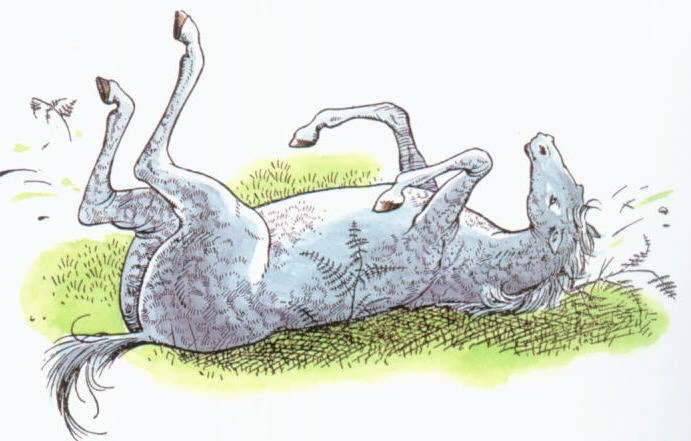
Bree, like Quick Draw McGraw, is honorable and has a strong sense of doing what is right. And like Quick Draw, he is rather blind to his faults. But whereas Quick Draw was just mostly dim-witted and ignorant, Bree is more conceited, arrogant, and a bit of a braggart. As a warhorse valued over other basic Calormene steeds, Bree was proud and was a veteran of many battles. He waxed tales about his valor, and was very patriotic towards his homeland of Narnia. He found doing certain things beneath his station, such as letting a commoner like Shasta ride on him, cutting off his tail as part of a disguise, or rolling around in the grass.
An encounter with a hermit (and later Aslan the Lion) brings him down a couple of notches when he realizes that his life being surrounded by Calormene is what made him special; he would just be another talking horse in Narnia. He is also insecure and unsure of himself when the situation became dire. For example, he had a liking for rolling around in the grass but was worried about his status. His counterpart, Hwin, just felt it was natural. While it can be assumed that Bree and Shasta are the closest to each other, its apparent that Bree equally cares for Aravis and Hwin too. It's a very interesting dynamic because Bree and Aravis are the two most flawed characters in The Horse and his Boy, while Shasta and Hwin balance each other out. By all accounts, Bree should belong more with Aravis (A fact that Bree even mentions), but instead the four have great chemistry together.
Bree. We still have no idea when The Horse and his Boy will get a movie adaptation, but I sure hope Bree will be done justice on the big screen.
-------------------------------------------------
#5-Boxer (Animal Farm)
Time for a tragic horse who was misguided, ignorantly abused, and suffered a terrible fate.
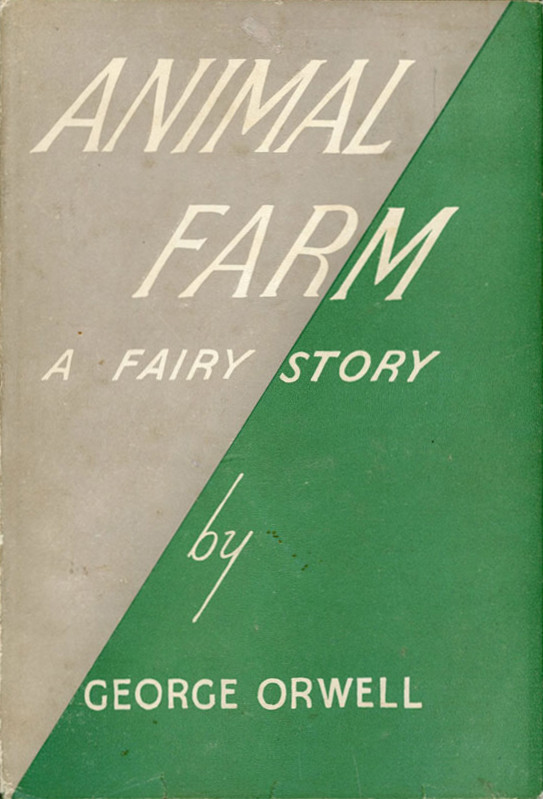
English novelist Eric Arthur Blair (under the pen name George Orwell) once saw a boy on a farm continually whip his horse to continue working. Musing about the idea of animals being smarter than we give them credit for, he combined a farm-setting with the rising situation of Russian communism before and during World War II. Eventually in 1945, a book was published that tells of an allegorical tale that transplants the ideas of Russian communism into a smile English farm, with animals taking the place of major political figures. That book was called...
A "fairy" story indeed...
Animal Farm shows us the rise and fall of a farm where the animals, under the leadership of two pigs named Napoleon and Snowball (Based off Stalin and Trotsky respectively), overthrow the human farmer by driving him out. The two pigs then set up their new farm, Animal Farm, and follow the Seven Commandments of Animalism as outlined by the philosophy of their mentor, Old Major (Based of Karl Marx). Some of these commandments include sayings like "Whatever goes upon two legs is an enemy" or "All animals are equal". Over the course of the book, life becomes difficult for the denizens of Animal Farm when Snowball is ousted out and Napoleon takes over. Things spiral downwards from then on, with many of the average animal citizens getting screwed over by the regime or by bad circumstance.
One such individual is Boxer, a cart-horse. Boxer is widely recognized as one of the kindest, hardworking, determined, and loyal animals on the farm. He is friendly towards the commoner animals, the only real friend of the cynic donkey Benjamin, and keeps things together among the commoner animals despite the troubles of Animal Farm.
And he is thick. Very thick. He is also dim, naive, gullible, and is so helpful to others that he forgoes helping himself.
Boxer was written as an allegory of the Russian workforce who were loyal to Stalin. As seen in the picture, the above quotes are Boxer's catchphrases throughout the story. Boxer was one of the animals that were targeted by the pigs during a purge because of the horse's defense of Snowball, but he is easily able to overpower Napoloen's attack dogs. Despite the troubles of Napoloen's regime, Boxer firmly believed in the pig and that anything could be solved by more work. Things would come to a head when the overworked exhausted Boxer, close to retirement, is mortally wounded by an attack from another farmstead. Despite Napoleon's assurance that he was going to a vet and be healed, in reality he was taken away to be slaughtered. The commoner animals find out and fail to warn Boxer of this because Boxer is too weak to comprehend his surroundings.
Boxer can really be seen as the tragic figure of the story because of all of this. His death and subsequent funeral is one of the saddest moments in the story, where all the animals mourn the loss of their dear friend. All the commoner animals, from the chickens to the dogs, have bad stuff that happens to them and could get the reader/viewer in tears, but Boxer's death really seems to be the one that breaks them completely. The final nail in the coffin? The pigs throw a feast in Boxer's honor...and the whiskey served during it was bought using money obtained from selling Boxer.
Boxer. If some of the events of the book didn't get you crying, Boxer's ultimate end will certainly do it.
--------------------------------------------------------------
#4-Epona (The Legend of Zelda)
In the (confusing) timeline of The Legend of Zelda series, there are often certain recurring characters that crop up again and again. Usually they are the hero Link, Princess Zelda, the evil Ganondorf...and Link's faithful steed, Epona.
Epona made her first appearance in arguably the greatest game in the entire franchise (And a contender for one of the best video games ever created): The Legend of Zelda: Ocarina of Time. Link as a child first meets the horse at the Lon Lon Ranch when she is a young filly. The young Epona was wild and difficult to tame, but after young Link learns to play the above Epona's Song on his ocarina, Epona starts to warm up to him. When Link as an adult later returns to Lon Lon Ranch, Epona is grown as well, and only then does she allow Link to tame and ride her. Despite being limited to just his bow and arrow while on her, Epona is an invaluable asset to Link as he travels around the vast world of Hyrule.
The Legend of Zelda series is typically an action-adventure game that involves puzzle-solving and exploration. Its previous entries in the series on the Nintendo Entertainment System, Super Nintendo and Game Boy did certainly provide large maps to explore, but with Ocarina of Time on the Nintendo 64 being the first 3D entry in the series, the world was certainly going to become much larger. As such, I can imagine that producers of the game wanted to include a new gameplay option that allowed traveling in the new world much easier. Thus, Epona was born, designed by producer Yoshiaki Koizumi.
Epona the horse's namesake: The Celtic goddess of fertility and protector of horses
Epona has had great reception in the Zelda fan community, with some going as far as saying that the world of Ocarina of Time has been built specifically for riding Epona. Epona is also considered by many to be the greatest video game horse. To add to Epona's awesomeness in Ocarina of Time, she is completely invulnerable to enemy attacks, with a common tactic of players being to ram enemies with Epona herself and making her a valuable weapon. Epona would make sporadic appearances in future entries in the Zelda series, like The Minish Cap for the Game Boy Advance, Twilight Princess for the Wii, and the upcoming entry on the Wii U. There are even some who insist that the random horse seen in Oracle of Seasons/Ages on the Game Boy Color is Epona as well.
Epona. Her bond with Link transcends generations and timelines.
---------------------------------------------
#3-Fritz, the first Wonder Horse
Every movie, TV show, book or radio show that features a rider and their bond with their trusty steed can probably owe themselves to the very early days of the silver screen, back when black and white was the norm, and the silent era of films was in full swing. During the first 40 years of the 1900's, cowboy movies were a loved genre, mostly by children. They detailed the stories and thrilling tales of a heroic cowboy thwarting villains and bad guys. But of course they were not alone. Their horses and steeds played a part too, and they are often the reason why the cowboy is able to do what he is able to do. The horse provided speed, mobility and companionship to these wanderers of great justice. They are not just animals or objects that are taken for granted like cars.
Thus the term "Wonder Horses" was born. They are, in a nutshell, horses that have broken the mold and began to be credited alongside their co-stars be they equal billing or top billing. They basically became celebrities in their own right, equal to Hollywood film stars that have their own personality. Many of the movies that these Wonder Horses appeared in often highlighted the bond between the horse and rider, and this seeped into real life too. There are six notable Wonder Horses, but the one I'm highlighting is the very first one: Fritz, a pinto pony.
Now technically, Fritz wasn't the "first" Wonder Horse. That honor would go Tony, the co-star of actor Tom Mix. But Fritz was the first horse to have equal billing with the main actor of a movie. In this case, William S. Hart. Fritz pretty much set the standard for Tony and all the succeeding Wonder Horses in the lineup. Fritz and Hart starred in eight silent films from 1915 to 1924, and in that time the two bonded beyond just movies, and both Hart and Fritz received fan fail from viewers who loved their chemistry on and off screen.
Fritz's "autobiography"
A highlight of Fritz that's often mentioned in articles and publications is the amount of dangerous stunt work the two did. And keep in mind, this was the early 1900s of film. There were tons of cinematic techniques that were not invented, so practical stunt work really shined here. Certain examples include jumping through windows, wading through moving rivers, and almost getting sucked into a whirlpool to his death along with Hart. After an illustrious career, Fritz retired and lived the rest of his years at Hart's ranch in California. Upon his death, Fritz's grave was marked by a cobblestone that marked him as Hart's loyal comrade.
Fritz. His soul lived on through fictional horses and their steeds to this very day.
----------------------------------------------
#2-Maximus (Tangled)
"This is one of the great movie horses. He's like the Javert of horses, it's just a great character. I could watch this thing forever. It just cracks me up."
-Doug Walker. Disneycember Review: Tangled
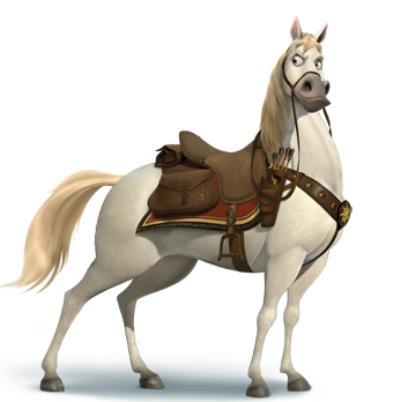
While I personally haven't seen or had any close connection to any movie horses, I can agree that Maximus from Tangled is a wonderful character. He is, in my opinion, the best character in the movie. Sure Rapunzel and Flynn Rider carry the movie and have some wonderful, heartwarming moments, but when it comes to balancing out humor with badassness, Maximus wins hands down.
Maximus is first introduced shortly after Flynn Rider swiped the crown of the lost princess from the castle of the kingdom (Identified in supplementary material as the Kingdom of Corona). Max is the steed of the Captain of the Royal Guard, and even after his captain gets knocked away, Max still keeps the chase to apprehend Flynn Rider. Even after all the abuse Maximus gets, be it falling from a cliff or being swept away by a flood, he still keeps going. He can even fight with a sword between his teeth.
Like a BOSS.
He's not a full antagonist in a sense that he is unsympathetic; that would be the movie's actual villain Mother Gothel. No, Maximus is just simply very dedicated to his duty as a royal steed of the kingdom. In many ways he's like Bree from Narnia, except that he doesn't talk. We don't really see much development for Maximus since he serves as a comic relief sidekick, but it is there. We can assume that Maximus is extremely intelligent and understands full human speech, because Maximus is like putty in Rapunzel's hands here.
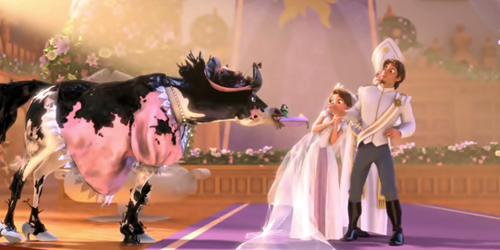
So through Rapunzel's interactions with Flynn Rider (Eugene), Maximus is able to see a new side to the thief, and discover that he's not so bad after all. This eventually leads Maximus to siding with Eugene and save him from his execution, and to lead Eugene back to the tower to save Rapunzel from Mother Gothel. But this isn't the end of Maximus's antics, as we see in the short Tangled Ever After where Maximus and Rapunzel's chameleon Pascal has to retrieve lost, runaway wedding rings, and have a crazy adventure for the books.
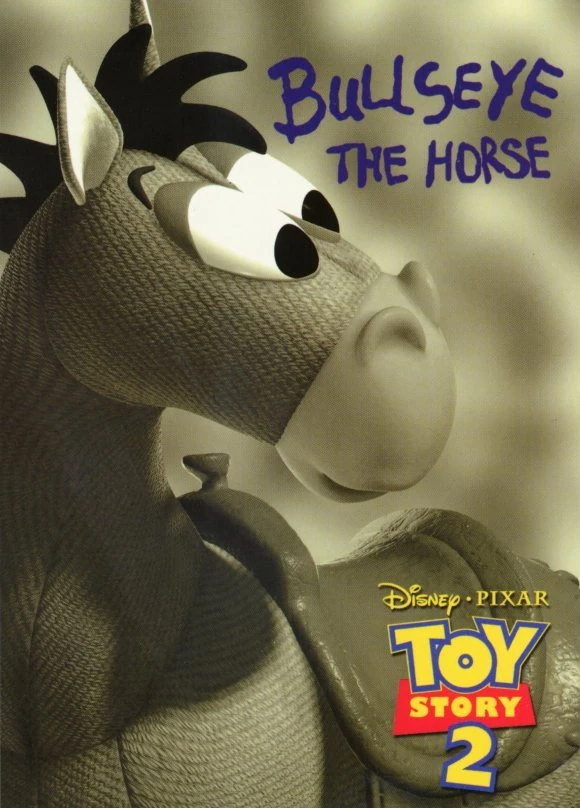
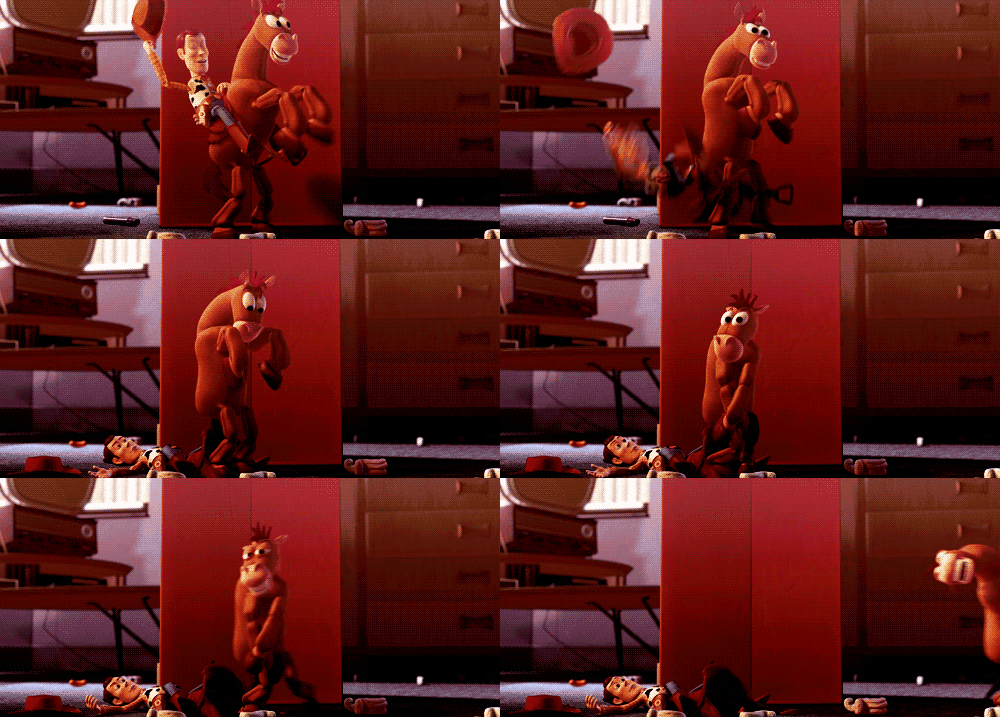
Maximus in a way can be seen as a combination of many of the horses seen on this list; the determination of Spirit and Boxer, the honor of Quick Draw and Bree, the mannerisms of Bullseye, and maybe Comet too because of Maximus's extreme durability. Maximus having no voice and just letting his actions speak makes for one heck of a movie horse and definitely adds credibility of Tangled's directors saying that he is "The Tommy Lee Jones of Horses".
Maximus. Maximum awesome and hilarity.
And just for a bit of a plug, if you want to see continuing adventures of Maximus and the other characters of Tangled, read the fanfiction
Tangled Adventures in Arendelle. 16 chapters have been written so far, and is authored by yours truly.
-----------------------------------------------------
Now before we get to the final horse on the list, some honorable mentions:
Rocinante-Don Quixote
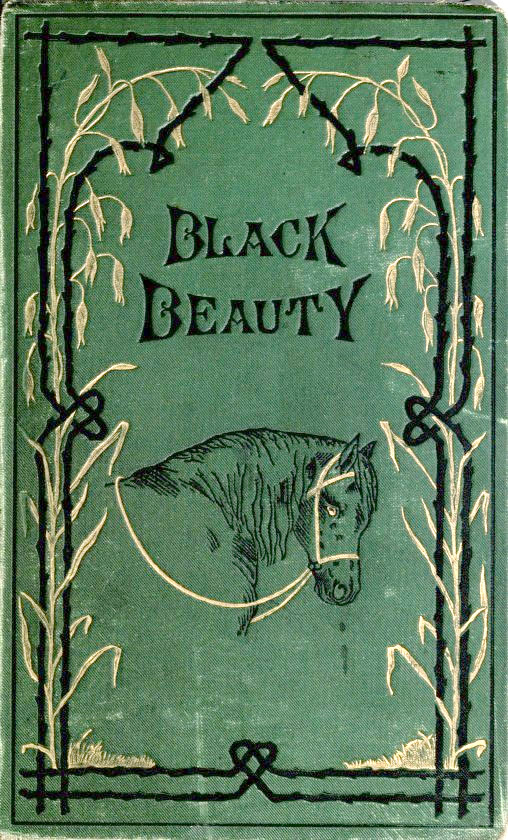
Black Beauty
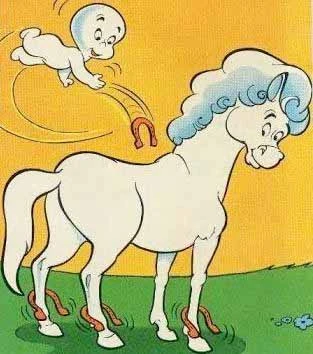
Nightmare (Casper)
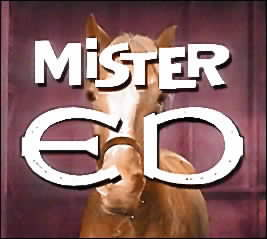
Mister Ed
Agro (Shadow of the Colossus)
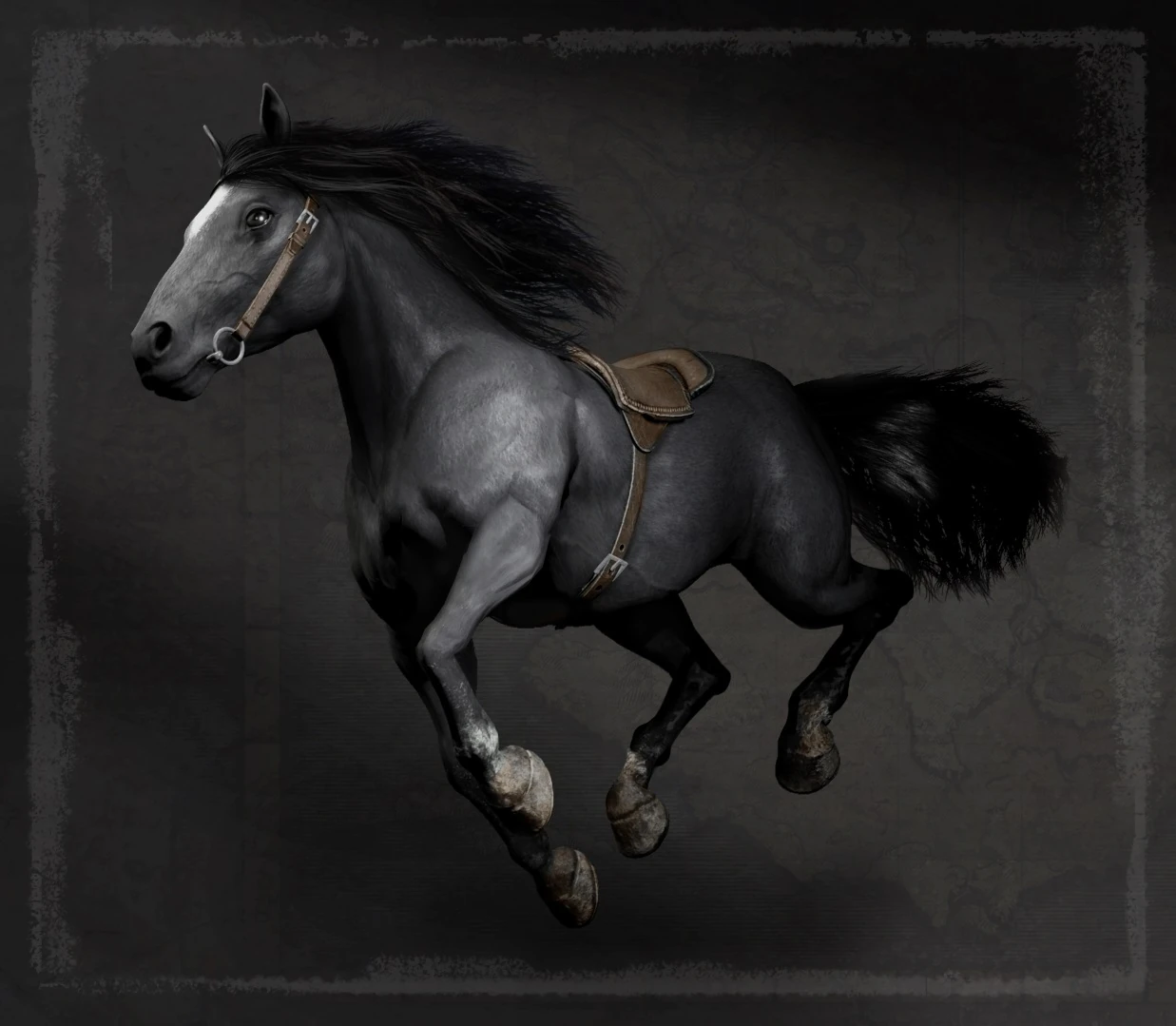
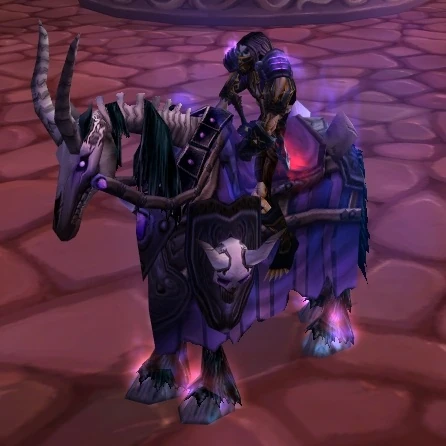
Forsaken Warhorse (World of Warcraft)
And my final entry in my top 14 fictional horses is...
----------------------------------------------------------
#1-Applejack (My Little Pony: Friendship is Magic)
It's a good thing that this list is just strictly limited to purely horses and no mythological creatures, because when it comes to My Little Pony: Friendship is Magic, there are tons. And Tons. AND Tons. AND TONS. Of characters.
And this is just Season 1
The My Little Pony franchise was created in 1981 by Hasbro, the same company that manufactures the toylines of Transformers & GI Joe, and various board games like Battleship, Scrabble, and Monopoly. and just like Transformers, My Little Pony has been reinterpreted and re-imagined over the past decades across different toylines, animated series, cartoons, etc. The various "generations" of My Little Pony have been able to garner moderates amount of cash from the girls demographic as Transformers did for boys, but it wasn't until 2010 and the "4th" generation (The Friendship is Magic line) that the popularity of My Little Pony exploded into a worldwide phenomenon that not only captured the hearts and minds of little girls, but also teenage boys and adult men and women.
The exact reasoning of why has many reasons that could take a while to explain, so I won't focus on that and just talk about the characters
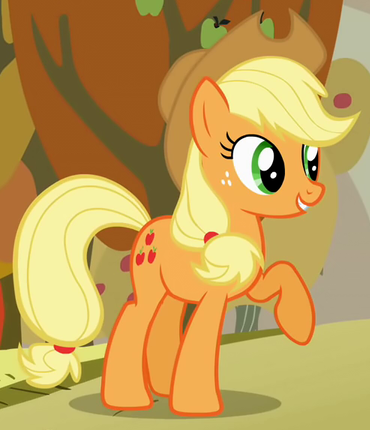
The character of Applejack has appeared in Generations 1 and 3 of My Little Pony, and is one of the main characters of Friendship is Magic. In fact, she is one of two characters in the newest incarnation to appear since the very beginning of the franchise. Applejack is an Earth Pony, meaning that she is a pony that does not have wings or a unicorn. In the show's story and world of Equestria, Applejack grew up on a family farm in the town of Ponyville, but yearned to find her purpose and dreams in the big city. As expected she became unhappy and homesick, and realized that she indeed was a farm pony at heart. With that, she earned her Cutie Mark, a pony's symbolization of personality, proclivity and/or talent. As seen above, Applejack's Cutie Mark is a symbol of three apples, signifying her love for farming her family's specialty: apples
Applejack's extended family
Applejack, like nearly all the horses listed on this list, is kind, helpful, brave and reliable. She is very empathetic towards her friends and family, and strongly believes in her family traditions and upholding the responsibility of helping run the family farm. When a unicorn named Twilight Sparkle visits Ponyville and brings tons of misadventures with magic, the ruler of the land Princess Celestia bestows the Elements of Harmony onto Twilight Sparkle and her new friends Rainbow Dash, Pinkie Pie, Rarity, Fluttershy, and of course Applejack. The latter obtains the Element of Honesty.
But like all good characters, Applejack is not without her flaws. Applejack is a pony of many talents, including possessing remarkable physical strength, athleticism, cooking, herding, musical talent, and ice sculpting. As a result she is very headstrong about doing things on her own when she has important work to do. She once overworked herself to exhaustion when harvesting all the apples herself. She is also stubborn at times and refused to give up, leading to an on-and-off rivalry with her friend, the Pegasus Pony Rainbow Dash. Her lifestyle and lack of manners at times sometimes leads the unicorn Rarity to be disgusted with her, though this isn't necessarily a negative trait. And as a result of her bad experience in the city, she has little-to-no experience in mixing with the richer upper class and dislikes anything overly girly and fancy. She also has her darkest moment in the show when the villain Discord corrupts her, and she becomes a nasty, compulsive liar. Through the magic of friendship, Applejack and the rest of the gang overcome Discord, and Applejack vows that she'll be just as honest as she could without going into excess.

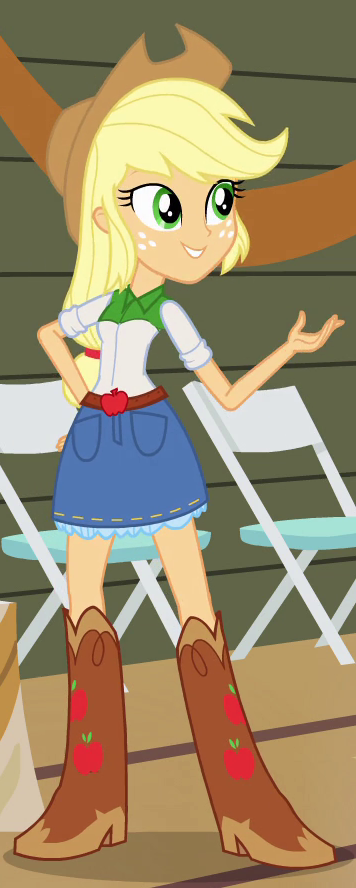
Applejack's human form in the one-off special movie Equestira Girls
It's because of this balance of good character traits and flaws that makes Applejack such an endearing character in the show. She is just as remembered for her southern drawl and signature cowboy hat. Sure when it comes to the rest of the MLP:FIM cast Applejack is often overshadowed by the meekly cute Fluttershy or the hyperactive crazy Pinkie Pie (Who is also an Earth Pony), but Applejack is my pick as the MLP: FIM representative on this list because she really personifies what a horse is most well known for in pop culture and fiction. And in a show that appeals to a massively wide audience, she can teach little girls and touch older viewers too.
Applejack. The apple of many viewers's eye.
--------------------------------------------
So, that's that. I hope you all enjoyed my (long) list about horses, and come back soon for my review of the movie adaptation of Into the Woods. Closer to February 19, Chinese New Year, I shall do another list in Part 2 of my Chinese New Year Special: My Top 15 Fictional Sheep/Goats/Rams.





.jpg)




_002.png)








.png/revision/latest?cb=20090321133802)

.png/revision/latest?cb=20140930125513)



.jpg)
_10f.jpg)